A Five-Year Plan for School Self-Evaluation
Most school leaders are asked to show results from a new initiative within a year or two. Karalei Nunn, Founder and CEO of Meridian World School, believes that is usually too soon.
At the 2026 Texas Public Charter Schools Conference, Karalei shared the 3-1-1 Evaluation Cycle, a five-year plan for evaluating your school. You spend three years putting new work in place, one year gathering evidence, and one year reflecting and planning what comes next.
Her guide walks you through every year of the cycle, with a rubric, a timeline, and a worksheet you can use with your team. Fill out the form below to download it free.
What 3-1-1 stands for
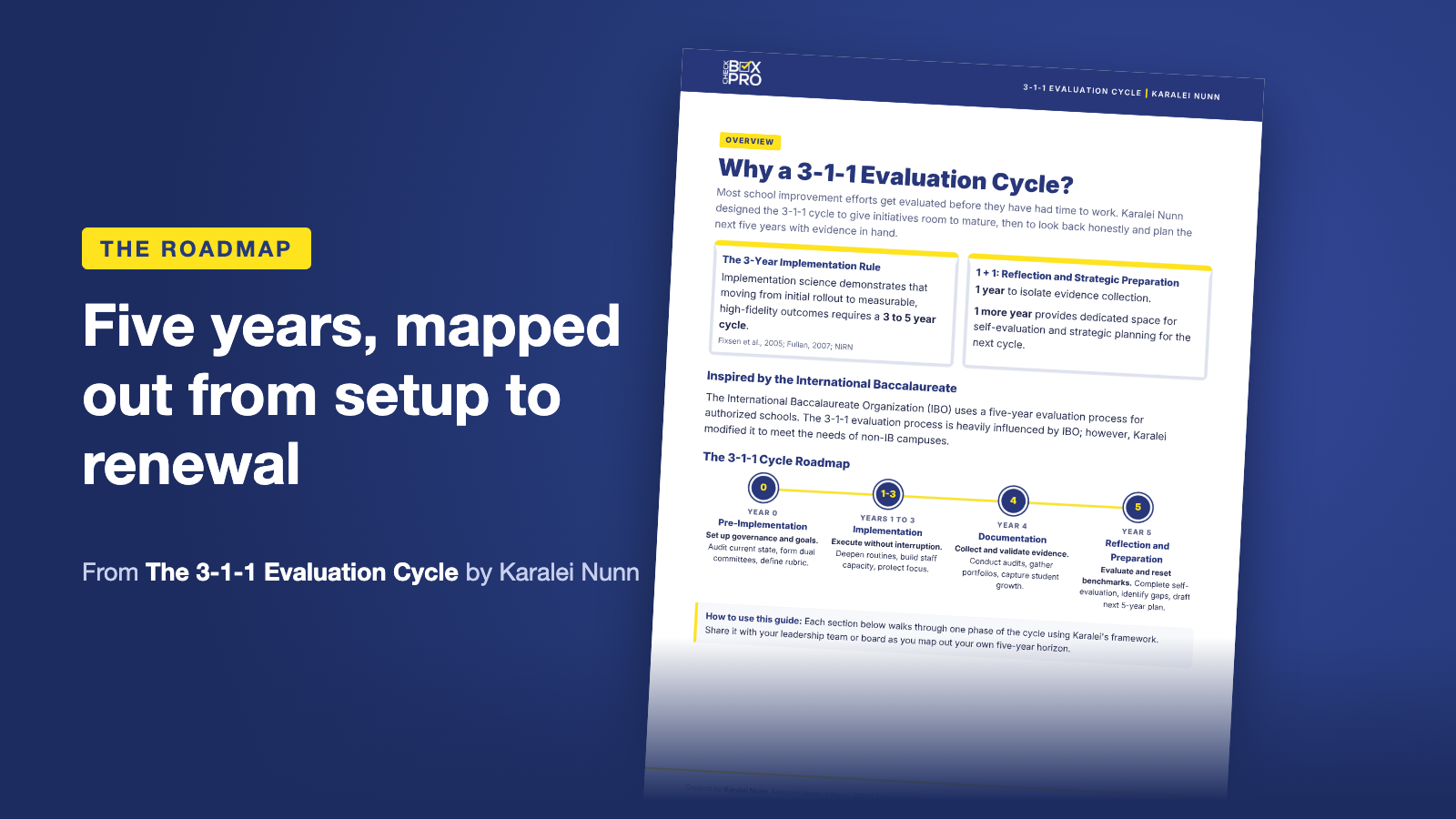
The name is the schedule. Three years of implementation, one year of documentation, and one year of reflection and preparation, with a "Year 0" up front to set the foundation.
Karalei modeled the cycle on the five-year evaluation process the International Baccalaureate uses for its authorized schools, then adapted it for campuses that are not IB. The timing is intentional. Implementation research is clear that moving from rollout to real, measurable results takes three to five years. Most schools judge their initiatives long before that.
Two committees, two kinds of truth
In Year 0, you form two groups that stay with the work for the full cycle.
The Expectations Committee (district leadership, campus admin, and teacher leaders) sets the rigor benchmarks and keeps the evidence portfolio. The Impact Committee (parents, student leaders, and non-admin staff) checks how those policies and initiatives actually feel on the ground.
Karalei sums it up as +Rigor and +Impact. One group keeps raising the bar. The other keeps it honest.
A rubric that names the mindset
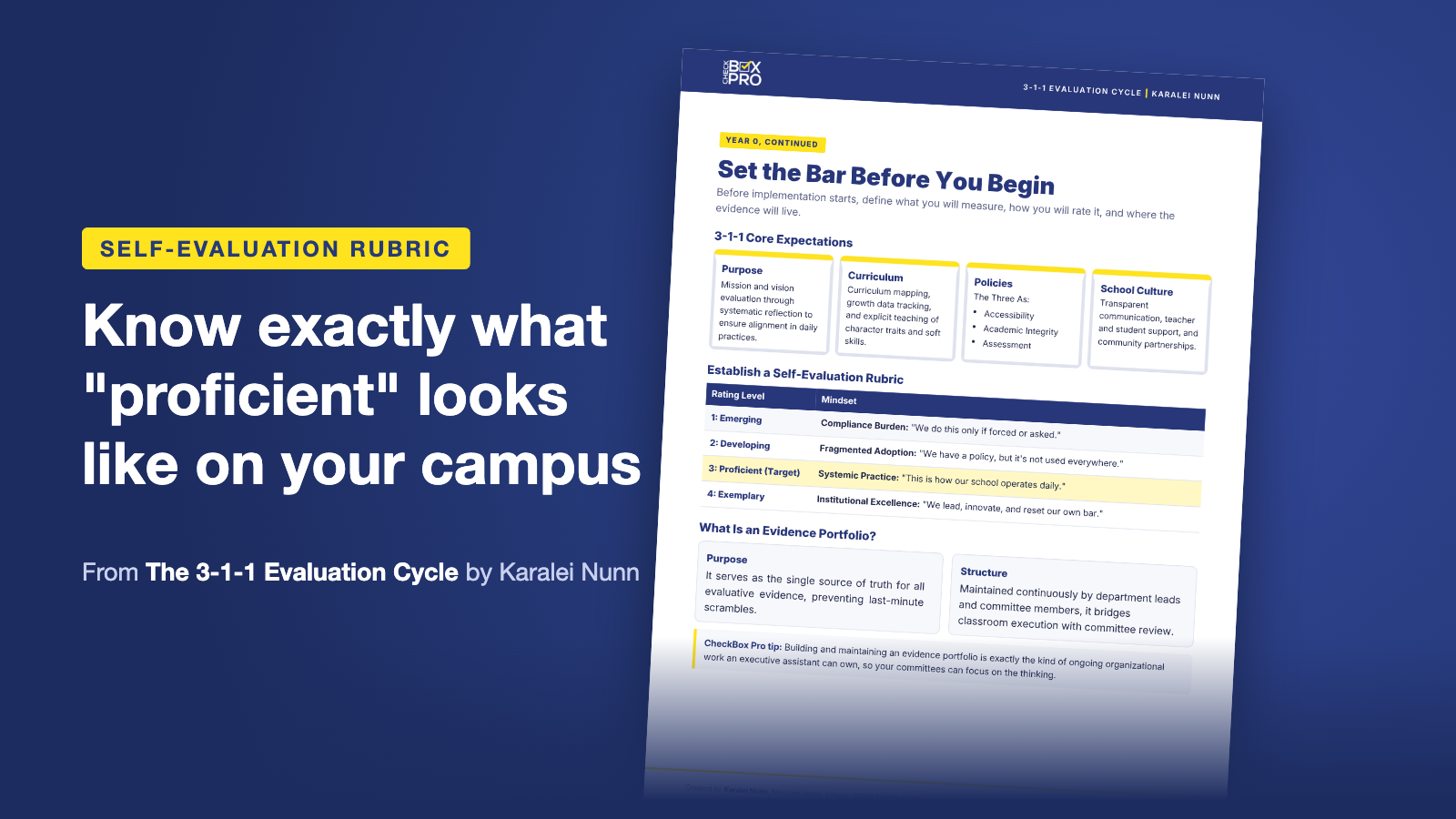
Instead of vague ratings, Karalei's self-evaluation rubric describes what each level sounds like inside a school:
Emerging: "We do this only if forced or asked."
Developing: "We have a policy, but it's not used everywhere."
Proficient: "This is how our school operates daily."
Exemplary: "We lead, innovate, and reset our own bar."
Proficient is the target. It is a standard your whole team can recognize, which makes the conversation about where you are a lot easier to have.
Three years without an audit
This might be the most freeing part of the model. During Years 1 through 3, there are no formal audits. Year 1 is for setting up systems and routines. Year 2 is for mid-cycle adjustments. Year 3 is for letting programs mature into real daily habits instead of rushed compliance.
Your committees keep meeting and the evidence portfolio keeps growing, but nobody is pulling the plant up to check the roots.
The documentation year
Year 4 is when you gather the proof. The guide includes a suggested 10-month timeline, from baseline surveys and core evidence collection through deep-dive audits, focus groups, and a final lock on the evidence portfolio. It also lists concrete examples of what evaluative evidence can look like, from curriculum maps and PLC data to family communication logs.
Fix the system, not the people
In Year 5, the committees merge their findings and look hard at anything rated Emerging or Developing. Karalei's tool for this is the "3 Whys" Protocol.
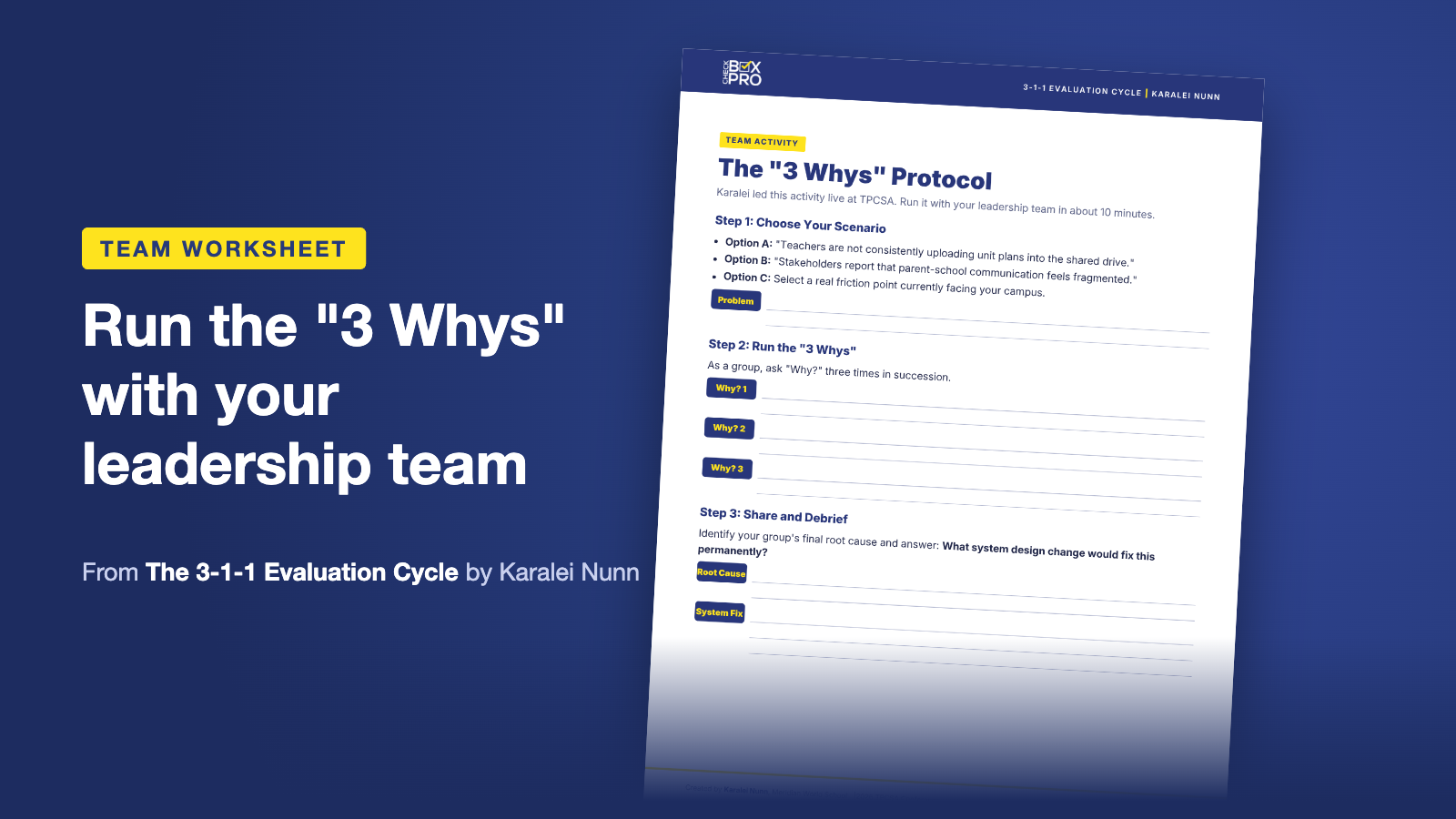
Unit templates are not being used. Why? Teachers do not have time to fill them out. Why? The template requires redundant data entry. Why? The system was never streamlined before launch.
The fix is not more reminders to teachers. It is a better template. The guide includes a worksheet so you can run the protocol with your own team.
What is inside the guide
The full 3-1-1 roadmap, from Year 0 through Year 5
Roles and focus areas for the Expectations and Impact Committees
The 3-1-1 core expectations and four-level self-evaluation rubric
A Years 1 to 3 focus snapshot by purpose, curriculum, policy, and culture
A suggested 10-month documentation timeline
Year 5 roles, deliverables, and the three steps to renewal
A fill-in "3 Whys" worksheet
Links to Karalei's IB comparison, sample rubric, and full evaluation toolkit
Meet the leader behind it
Karalei was an architect before she was a school founder. When she could not find the right school for her own kids, she built one. Her story is on Episode 61 of the CheckBox Pro Series, Building Something That Lasts.
Make it sustainable
A five-year cycle only works if someone keeps it moving: committee meetings on the calendar, evidence filed in the right place, surveys sent on time. That is exactly the kind of work a CheckBox Pro Virtual Executive Assistant can carry, so you and your committees can focus on the thinking.
Download the free 3-1-1 Evaluation Cycle guide
The roadmap, the rubric, the timeline, and the worksheet, all in one nine-page guide from Karalei Nunn. Share it with your leadership team and start mapping your own five-year horizon.